New Safety Rules, Battery Concerns and What Riders Need to Know in 2026
Electric bikes are continuing to change the way people travel across the UK, offering a practical alternative to cars and traditional bicycles. However, the latest developments in the e-bike sector are putting safety, battery reliability and tighter regulation firmly in the spotlight.
From new industry initiatives to calls for tougher controls on illegal electric bike conversion kits, 2026 has brought significant developments for riders, commuters, delivery workers and retailers. Here is a look at the biggest electric bike news stories in the UK and what they could mean for the future of cycling.
1. Calls for tougher electric bike regulations grow
One of the biggest stories this year has been the growing pressure on the government to tackle illegal and modified electric bikes.
In October, the House of Commons Library published an updated briefing on the regulation of e-bikes and e-scooters, highlighting ongoing concerns about road safety, enforcement and the regulation of rental schemes. The government is also considering measures to strengthen product safety requirements for electric bikes and conversion kits.
The issue follows a substantial increase in police seizures. According to figures reported by Sky News in August, UK police forces confiscated 7,049 electric bikes in the year to 19 May 2026, an increase of 83% compared with the previous year.
Much of the concern centres on bikes that have been modified to exceed legal speed or power limits. Such vehicles can create additional risks for riders, pedestrians and other road users.
For consumers, the message is clear: buying a compliant electric bike from a reputable retailer is increasingly important. Buyers should be cautious of unusually powerful or inexpensive models that make claims about speeds that would not be legal for ordinary electric bicycles on UK roads.
2. Battery safety remains a major concern
Battery safety is another major issue shaping the electric bike industry.
Lithium-ion batteries provide the energy that makes e-bikes convenient, but damaged, faulty or incompatible batteries and chargers can cause dangerous fires. These incidents have prompted renewed calls for stronger product standards, better consumer information and safer charging facilities.
A report published by University College London on 19 October 2026 examined the experiences of food delivery riders who regularly depend on electric bikes for their work.
The research found that 73% of surveyed delivery riders were concerned about battery fires, while 10% said they had personally experienced battery overheating. The report also highlighted difficulties faced by workers who may lack access to appropriate safety training, reliable equipment and suitable charging facilities.
The findings have strengthened calls for a more comprehensive approach to battery safety, involving manufacturers, retailers, delivery platforms and regulators.
How can electric bike owners reduce battery risks?
Riders can take several sensible precautions:
Use the charger recommended by the bike or battery manufacturer.
Safety is shaping the next chapter of UK e-bikes
Electric bikes remain an important part of the UK’s evolving transport landscape, but the latest headlines show that the industry faces growing questions about safety, regulation and consumer protection.
Rising police seizures, renewed concerns about battery fires and calls for tougher controls on unsafe conversion kits have put compliance firmly on the agenda in 2026.
For riders, the best approach is to buy responsibly, maintain equipment properly and keep up to date with the law. For manufacturers, retailers and policymakers, the challenge is to address safety concerns without undermining the accessibility and convenience that make electric bikes appealing.
As the market develops, the balance between innovation, affordability and safety will help determine how confidently more people choose electric cycling in the years ahead.
Avoid damaged, swollen, overheating or recalled batteries.
Buy replacement batteries from reputable suppliers and check compatibility.
Follow the manufacturer’s instructions for charging, storage and maintenance.
Avoid charging batteries near escape routes or leaving them charging unattended or overnight.
Stop using a battery if it shows signs of damage or abnormal overheating, and seek professional advice.
These precautions are particularly important for riders who use their bikes every day for commuting or delivery work.
3. New industry initiative aims to make buying an e-bike safer
With many consumers uncertain about which electric bikes meet UK requirements, the cycling industry is also working to make responsible purchasing easier.
In July 2026, the Bicycle Association and the Association of Cycle Traders launched E-Bike Positive, an industry initiative designed to help consumers identify road-legal electric bikes and retailers committed to safe products and servicing.
The initiative followed polling indicating that 84% of Britons surveyed were not confident they could distinguish a legal e-bike from an illegal one.
The scheme brings together participating brands and retailers that commit to relevant safety and compliance standards. It aims to make it easier for customers to identify trustworthy sellers and avoid potentially unsafe products.
For anyone buying an electric bike for the first time, checking a retailer’s credentials, understanding the bike’s specifications and confirming that replacement batteries and chargers are compatible are important steps.
The initiative also highlights a wider challenge for the industry: improving public confidence while making electric bikes accessible to more people.
4. Government considers stronger controls on online sales and conversion kits
Electric bike conversion kits allow conventional bicycles to be fitted with electric motors and batteries. While appropriately designed and installed systems can offer a legitimate way to electrify an existing bike, unsafe or incorrectly configured kits can create serious problems.
Some products can enable a bicycle to exceed legal motor power or speed limits. Poorly matched batteries, chargers and electrical components can also increase fire risks.
In October, food delivery company Deliveroo launched its Ride Safe campaign, calling for action against the sale of dangerous conversion kits. The campaign also includes measures intended to identify potentially unsafe riding practices among delivery workers.
Meanwhile, the government has been reviewing proposals to strengthen the UK’s product safety framework, including potential measures relating to electric bikes and conversion kits. As of late October, the government was still reviewing consultation responses on these proposals.
This means consumers should not assume that every conversion kit advertised online is suitable for use on public roads. Before buying one, it is essential to understand whether the finished bicycle would comply with the applicable legal requirements.
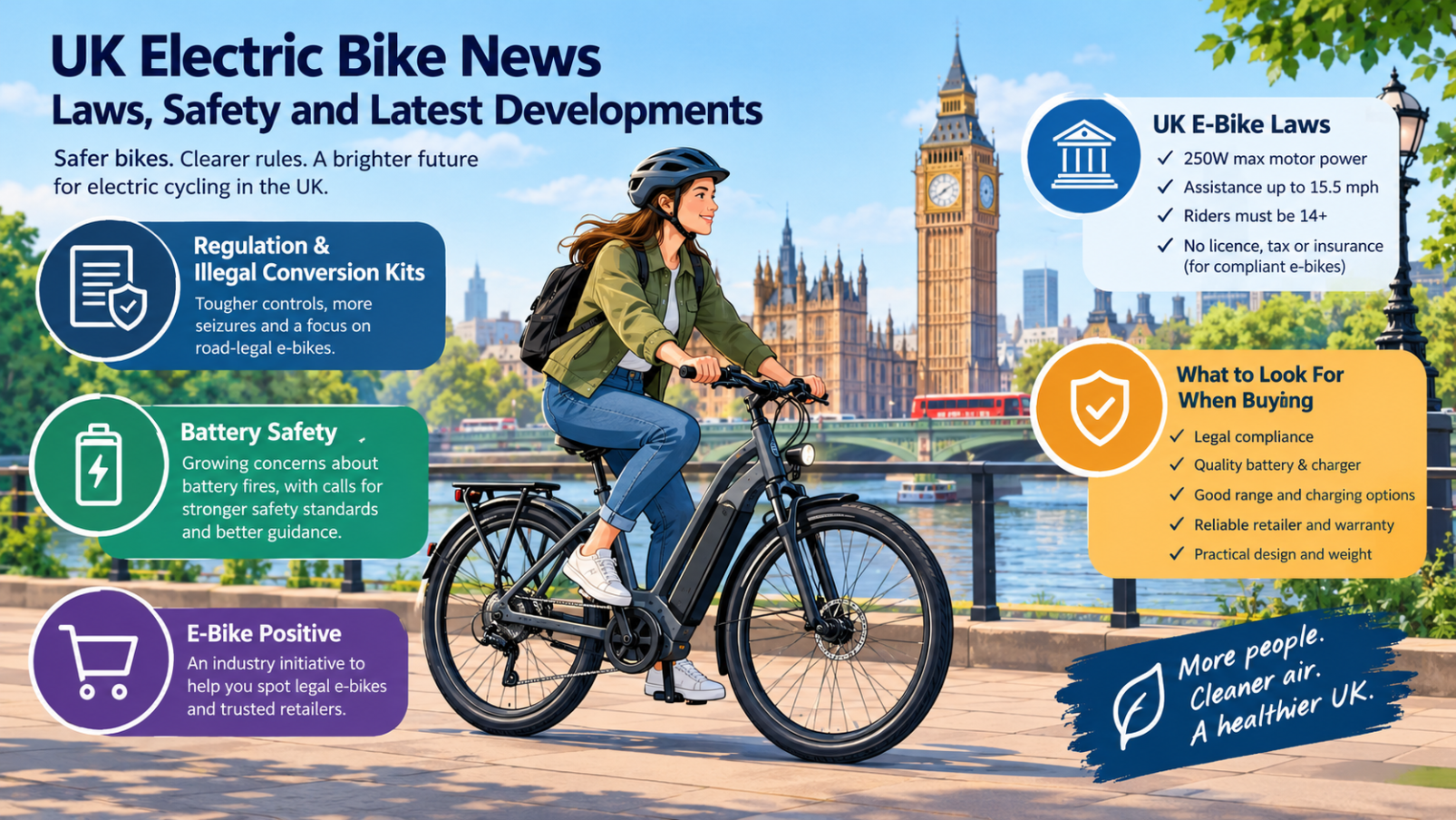
5. What are the current UK electric bike laws?
Despite calls for regulatory reform, the existing rules for ordinary electrically assisted pedal cycles remain an important starting point for anyone considering an e-bike.
Under current UK guidance, a standard electrically assisted pedal cycle (EAPC) must meet the following requirements:
Minimum age: Riders must be at least 14 years old.
Motor power: The motor must have a maximum continuous rated power output of 250 watts.
Assisted speed: The motor must stop providing assistance when the bicycle reaches 15.5 mph.
Pedals: The bike must have pedals that can propel it.
A compliant EAPC can generally be ridden wherever conventional bicycles are permitted, including cycle paths. It does not require a driving licence, vehicle registration, vehicle tax or motor insurance.
However, electric bikes that exceed the relevant limits or do not meet the EAPC requirements may be classified as mopeds or motorcycles. Different approval, registration, licensing, insurance and helmet requirements can then apply.
These rules are particularly relevant to buyers considering high-powered bikes, throttle-controlled models or aftermarket modifications.
Riders should consult the official government guidance before purchasing or modifying a vehicle.
6. What does this mean for the future of electric bikes?
The latest developments suggest that the UK e-bike industry is entering a period in which safety and consumer confidence will be just as important as performance and affordability.
For commuters, electric bikes can still provide an attractive alternative to driving, particularly for shorter journeys and trips that involve hills. They can also make cycling more accessible to people who might otherwise find conventional bicycles physically demanding.
For delivery workers, however, the conversation extends beyond individual responsibility. Reliable equipment, affordable replacement batteries, suitable charging locations and access to safety training are all important considerations.
Retailers and manufacturers may also face greater pressure to demonstrate that their products meet relevant standards and that customers receive clear information about maintenance and battery compatibility.
The precise impact of any new regulations will depend on the measures the government ultimately adopts and when they come into force.