
The Complete Parent’s Guide to Electric Scooter Safety for Kids
Even if your child doesn’t own an electric scooter, chances are they’ve ridden one—or will soon. Capable of reaching speeds of 15–20 mph, electric scooters have quickly become a rite of passage for kids seeking independence. For parents, though, that freedom often comes with mixed emotions: excitement for their child’s growing confidence, paired with concern about safety.
Child development experts agree that some level of “risky play” is not only normal but beneficial. It helps kids build confidence, coordination, and judgment. However, e-scooters introduce higher stakes than many traditional play activities. In the United States, e-scooter injuries rose by 80% in 2024, resulting in nearly 116,000 emergency room visits. Among children under 15, injuries more than doubled, with head trauma being the most common and serious outcome.
This guide is designed to help parents make informed decisions about electric scooter use. You’ll find evidence-based insights on injury risks, age-appropriate guidelines, essential safety gear, and strategies for teaching kids safer riding habits. You’ll also find a printable safety checklist to help families create clear rules and routines—so kids can enjoy the freedom scooters offer while minimizing unnecessary risks.
Risky Play: Why It Matters for Child Development
Risky play refers to exciting or physically challenging activities that involve a manageable chance of injury and allow children to test limits, face fears, and build confidence. Common examples include climbing trees, rough-and-tumble play, or exploring natural environments. Speed and momentum are often part of the appeal, which is why scooters can feel especially thrilling to kids.
Although risky play can be uncomfortable for parents to watch, research consistently shows that it plays an important role in healthy development. When children are allowed to take age-appropriate risks, they tend to become more resilient, independent, and better prepared to navigate real-world dangers later in life.
The Benefits of Risky Play
When balanced with reasonable safeguards, the benefits of risky outdoor play often outweigh the risks. Research from pediatric and child development organizations highlights several key advantages:
Builds resilience and confidence
Facing challenges—and sometimes failing—teaches children persistence, adaptability, and self-belief.
Strengthens physical health and coordination
Active play improves balance, motor skills, and cardiovascular fitness while supporting lifelong physical activity habits.
Enhances decision-making and executive functioning
Risk-taking helps children assess situations, regulate emotions, and solve problems—skills linked to better academic and life outcomes.
Supports mental well-being
Studies associate risky play with lower anxiety levels, fewer internalizing behaviors, and improved overall emotional health.
Develops social and emotional skills
Through play, children learn cooperation, empathy, conflict resolution, and communication.
Improves risk awareness and self-control
By testing limits in controlled environments, children learn how to recognize danger and make safer choices over time.
Encourages joy, curiosity, and autonomy
Risky play is self-directed and exciting, giving children a sense of ownership over their experiences and motivation to stay active.
When Risky Play Becomes Dangerous—and How Parents Can Step In
Risky play should challenge children, not expose them to serious harm. There’s an important distinction between risk and danger: A risk is something a child can see, understand, and learn to manage. A hazard is hidden or unpredictable and can lead to severe injury without meaningful learning benefits. Electric scooters can quickly cross that line—especially for younger children or those lacking the coordination to control speed and balance. While many shared scooter services attempt to restrict underage use, these safeguards are often easy to bypass, and children may access scooters through friends.
Parents play a crucial role in maintaining a healthy balance. Risky play should be child-led but adult-supported, with clear boundaries that adapt as children grow.
Practical Ways to Reduce E-Scooter Risks for Kids
Here are evidence-based strategies to help children enjoy scooters more safely:
Set clear, age-appropriate boundaries
Agree on where scooters can be used, acceptable speeds, and off-limits areas such as busy roads or steep hills. Adjust rules as your child’s skills and judgment develop.
Make protective gear non-negotiable
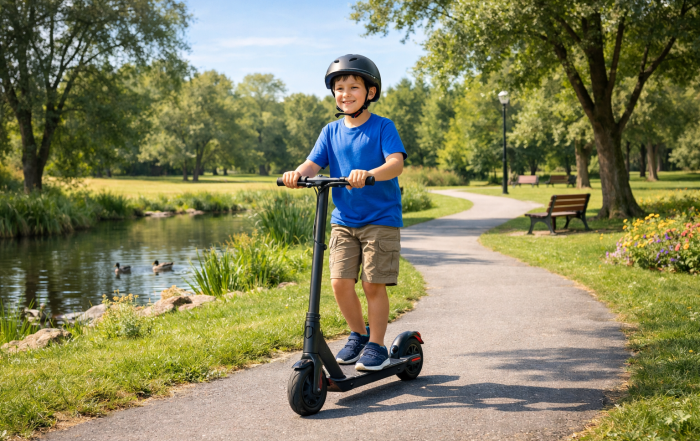
Helmets are essential. Wearing a helmet can reduce the risk of head injury by up to 44%. Knee pads, elbow pads, and wrist guards add further protection.
Model safe behavior
Children learn risk management by watching adults. Wear protective gear yourself, follow rules, and talk through your decisions out loud.
Supervise with intention
Stay close enough to observe without hovering. Step in if conditions change or hazards appear.
Introduce risk gradually
Start scooter riding in flat, open spaces at low speeds. As confidence and coordination improve, gradually expand boundaries.
Teach kids to assess risk independently
Ask guiding questions like, “Does that feel stable?” or “What would you do if you had to stop suddenly?” These conversations build awareness and decision-making skills.
Know when play becomes too risky
Avoid environments where mistakes could be catastrophic, such as traffic-heavy areas or unfamiliar terrain.
Final Thoughts
Electric scooters can be part of healthy, confidence-building play—but only when paired with thoughtful supervision, proper equipment, and open communication. By understanding the role of risky play and taking proactive steps to reduce hazards, parents can support both safety and independence as kids navigate this increasingly popular form of mobility.